
Feeling an overwhelming surge of optimism in my life. Don't much care for it. Means I'll have to do stuff.
❄
Daphnis is a small moon at 5 miles (8 kilometers) across, but its gravity is powerful enough to disrupt the tiny particles of the A ring that form the Keeler gap's edge. As the moon moves through the Keeler gap, wave-like features are created in both the horizontal and vertical plane.
❄
❄
NASA’s Webb Scores Another Ringed World With New Image of Uranus
The new image features dramatic rings as well as bright features in the planet’s atmosphere. The Webb data demonstrates the observatory’s unprecedented sensitivity for the faintest dusty rings, which have only ever been imaged by two other facilities: the Voyager 2 spacecraft as it flew past the planet in 1986, and the Keck Observatory with advanced adaptive optics. The seventh planet from the Sun, Uranus is unique: It rotates on its side, at roughly a 90-degree angle from the plane of its orbit. This causes extreme seasons since the planet’s poles experience many years of constant sunlight followed by an equal number of years of complete darkness. (Uranus takes 84 years to orbit the Sun.)
❄
❄
Darnit.
❄
Stacy has gone back to her Minnesota roots; she's started watching hockey. It's wonderful watching her watch games - she yells at the players, telling them what they should be doing (or should have done), and enjoys the fights.
I don't know much about hockey, but Stacy has been teaching me. I'm kinda hopeless with it. I keep comparing NHL players to babies: they're totes adorbs, they group hug for celebrations, chew their mouth guards like pacifiers, and every once in a while they throw a big tantrum and get put in a timeout.
Oh, and every time an announcer states that the players need a change? I giggle.
❄
I will concede that AI has made tremendous progress in these two critical areas: A) pretending to know what it’s talking about. B) stealing from artists.
BY THE WAY, it’s very on-brand for Earth 2023 that our robots are designed to sound plausible rather than be correct. Remember in Star Wars how C-3PO delivered a precise survival probability of flying into an asteroid field? (3720 to 1.) And Han Solo was like, “Shut up, C-3PO,” because he was too cool and handsome to be bothered by math. OR SO WE THOUGHT, because that was the kind of AI we were imagining in the 1980s: AI that was, before anything else, correct.
ChatBots are good at figuring out what comes next when you start a sentence with, “The capitol of Antigua is…” That’s pretty cool. We didn’t have that before. But it’s not intelligence. It’s almost the opposite of intelligence, like the difference between the kid in high school who was always studying and that guy who never studied but could talk and is now a real estate agent. Both can sound smart but only one knows what he’s talking about.
❄
Freedom by Dorothy (TROY NōKA Remix) ft. Angel Haze
❄
A neon sign that switches from "open" when open to "ope" when closed.
❄
A star has been destroyed by a wandering supermassive black hole
Back in 2024, a system set up to identify objects that suddenly brighten found something unusual. Unfortunately, the automated system that was supposed to identify it couldn't figure out what it was looking at. Now, about a year later, we know it's the first tidal disruption event—meaning a star being ripped apart by a supermassive black hole—identified at visual wavelengths. It's also a rather unusual one, in that the supermassive black hole in question does not reside at the center of its galaxy. Instead, there's an even more massive object there, which is feeding on matter at the same time.
All of the observations indicated that AT2024tvd is a tidal disruption event. For example, it maintained a high temperature throughout the observations, unlike a supernova, which tends to cool down over time. There were also fewer high-energy X-rays than one would expect from a supernova. The UV spectrum also looked like previously identified tidal disruption events, with the signature of elements like carbon and nitrogen that don't require a supernova to be produced. That makes this the fourth tidal disruption event we've identified that's the product of a supermassive black hole not located at the center of the galaxy. It's also the first that was initially identified at visible wavelengths.
❄
❄
❄
CERN gears up to ship antimatter across Europe
There's a lot of matter around, which ensures that any antimatter produced experiences a very short lifespan. Studying antimatter, therefore, has been extremely difficult. But that's changed a bit in recent years, as CERN has set up a facility that produces and traps antimatter, allowing for extensive studies of its properties, including entire anti-atoms.
❄
Stroszek (1977) by Werner Herzog.
Bruno Stroszek (played by Bruno S.) is a West Berlin street performer. He meets Eva, a prostitute down on her luck. They decide to leave Germany and accompany Bruno's eccentric elderly neighbour Scheitz to Wisconsin to live with his American nephew Clayton.
After Bruno S. died recently, Herzog remarked "In all my films, and with all the great actors with whom I have worked, he was the best. There is no one who comes close to him. I mean in his humanity, and the depth of his performance, there is no one like him."
❄
PASS devices going off after the collapse of a tower. PASS devices are worn by firefighters, they go off when a firefighter stops moving.
❄
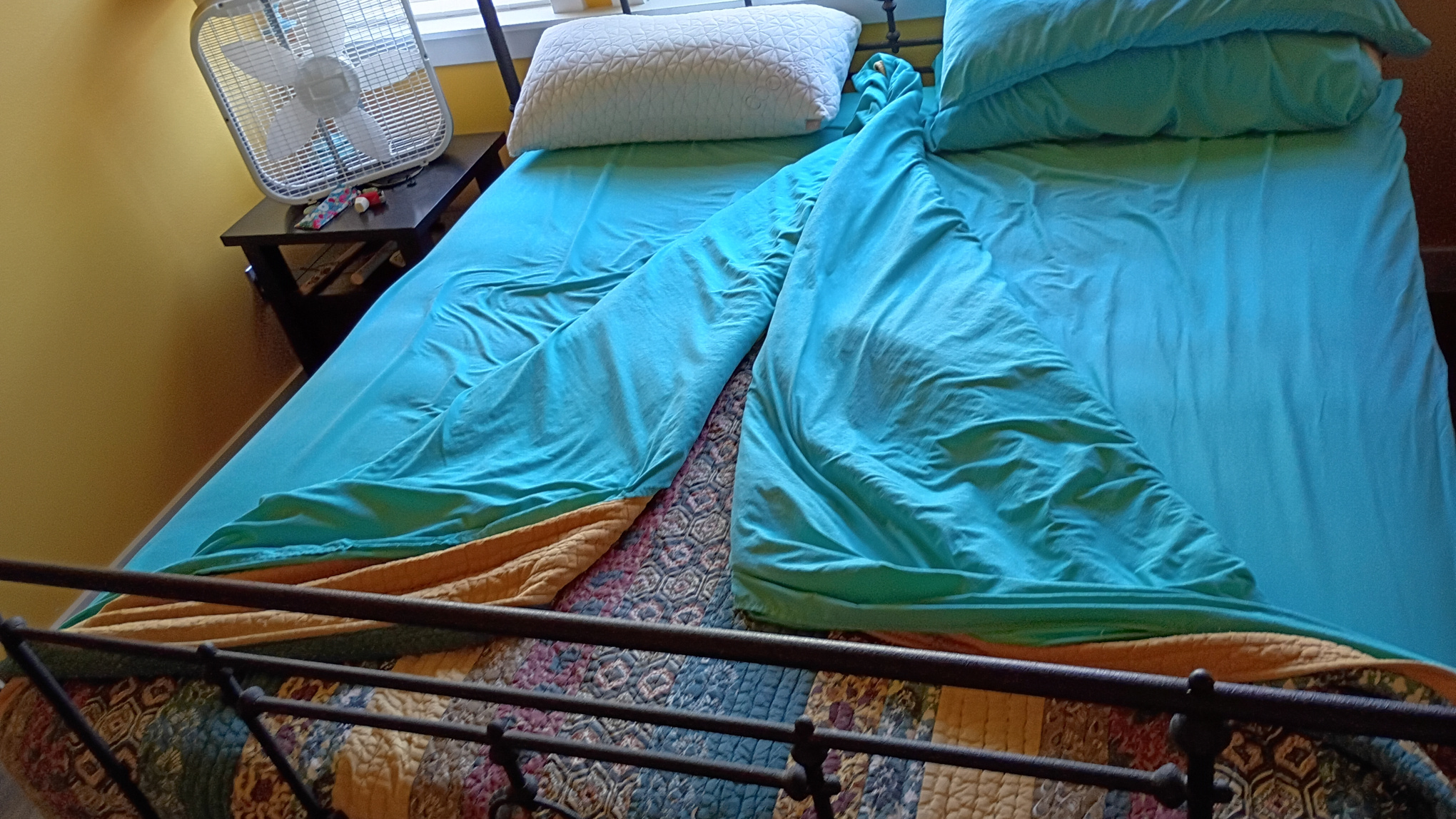
making the bed: paper airplane
❄
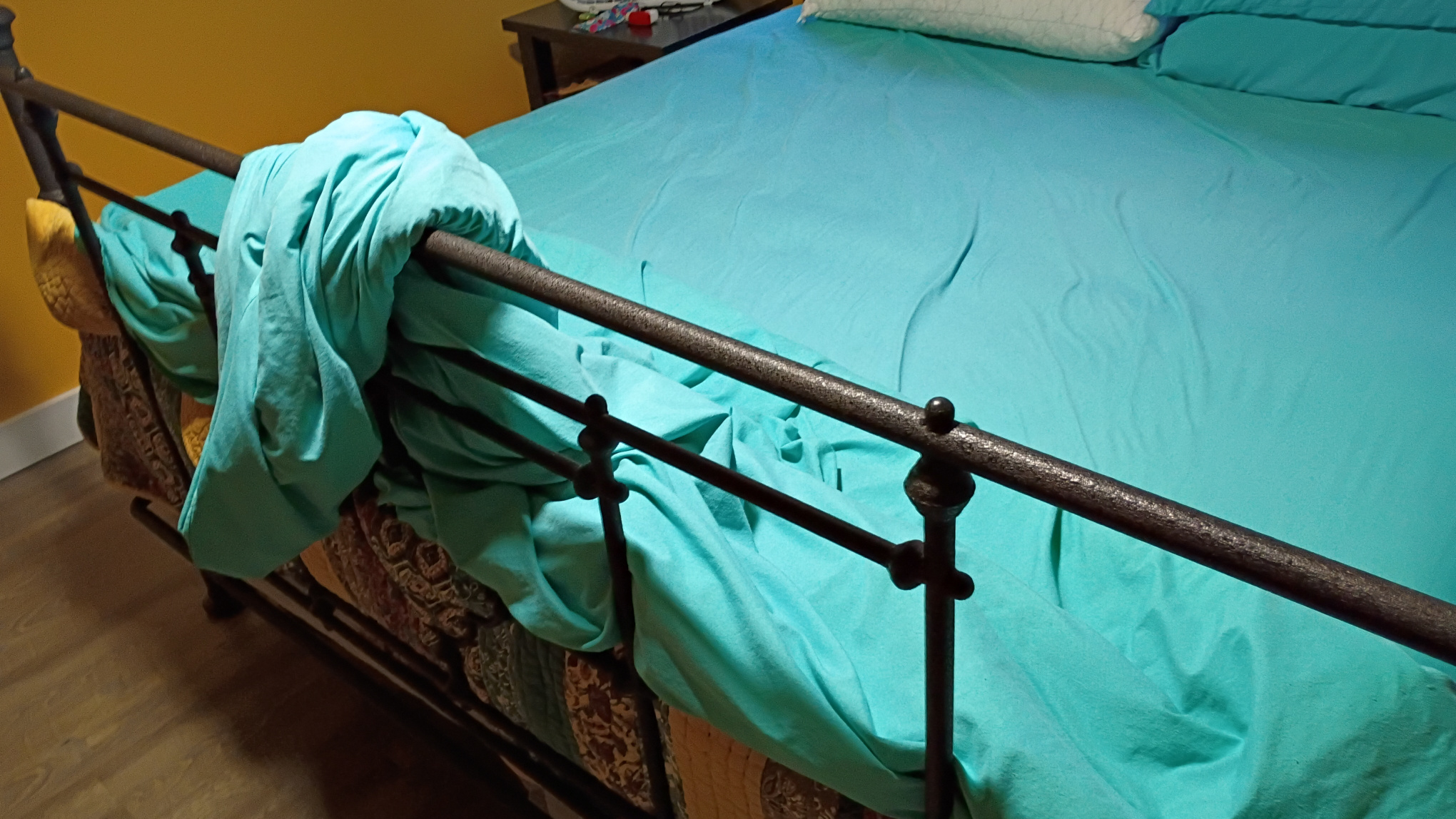
making the bed: waterfall
❄
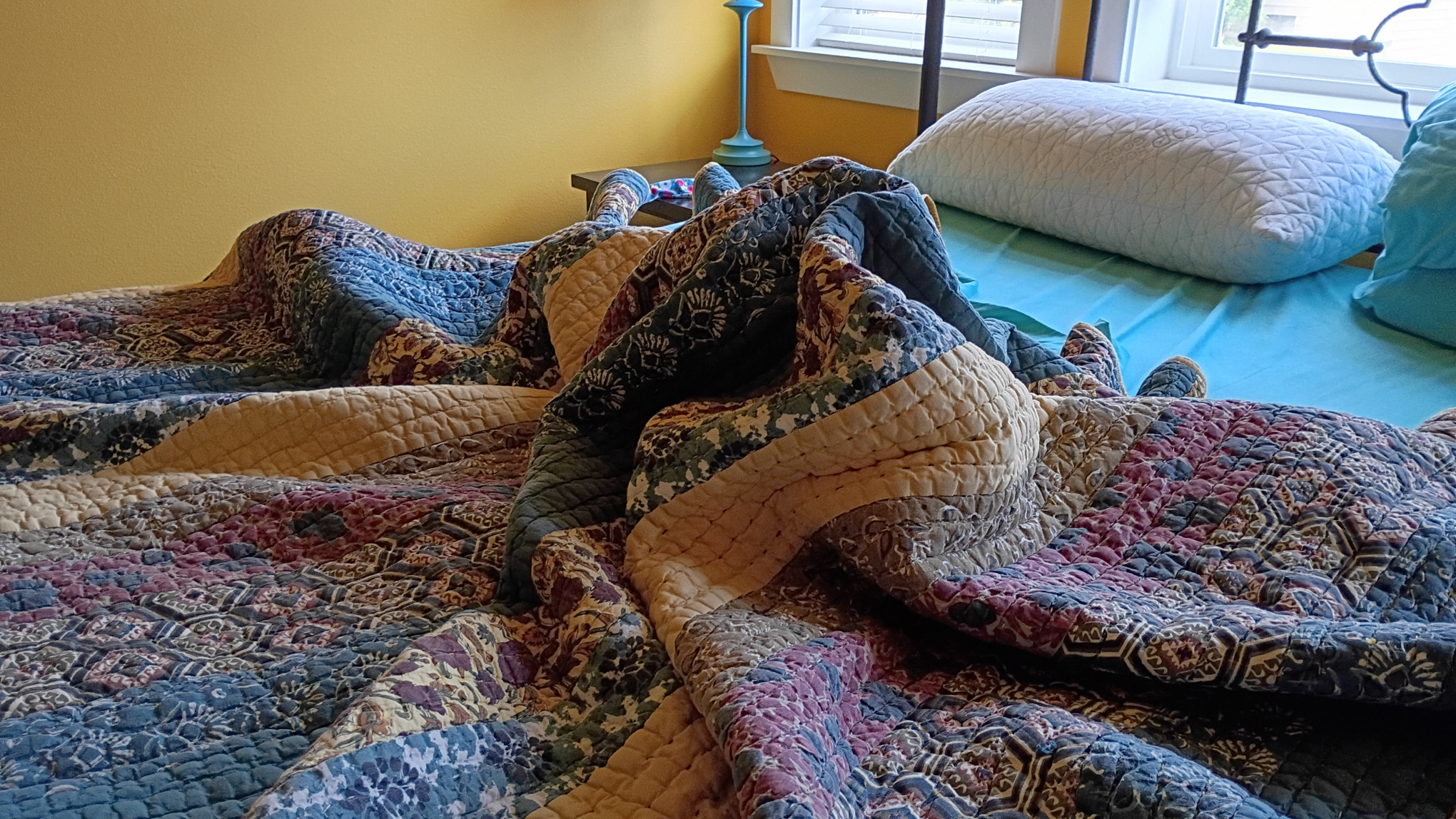
making the bed: mt. st. helens (for comparison)
❄
2022 Hunga Tonga–Hunga Haʻapai eruption and tsunami
In December 2021, an eruption began on Hunga Tonga–Hunga Haʻapai, a submarine volcano in the Tongan archipelago in the southern Pacific Ocean. The eruption reached a very large and powerful climax nearly four weeks later, on 15 January 2022. On the Volcanic Explosivity Index scale, the eruption was rated at least a VEI-5. Described by scientists as a "magma hammer", the volcano at its height produced a series of four underwater thrusts, displaced 10 cubic kilometres (2.4 cu mi) of rock, ash and sediment, and generated the largest atmospheric explosion recorded by modern instrumentation
The eruption produced a volcanic tsunami that affected Tonga, Fiji, American Samoa, Vanuatu, New Zealand, Japan, the United States, the Russian Far East, Chile and Peru... tsunami waves up to 20 m (66 ft) high. Tsunami waves with run-up heights up to 45 m (148 ft) struck the uninhabited island of Tofua.
Climate and atmospheric impact
The eruption produced a massive eruption column, reaching heights of 57 kilometres (35 mi) and thus breaking into the mesosphere. This is the highest recorded eruption column since Krakatoa’s in 1883, which extended up to 80 km (50 mi) high. The column developed two "umbrella"-like clouds, one at 31 km (19 mi) in height and the other at 17 km (11 mi), and generated a terrestrial gamma-ray flash. The column ejected a large quantity of water into the stratosphere, where it disturbed the local temperature balance and caused the formation of anomalous winds.
Large volcanic eruptions can inject large amounts of sulfur dioxide into the stratosphere, causing the formation of aerosol layers that reflect sunlight and can cause a cooling of the climate. In contrast, during the Hunga Tonga–Hunga Haʻapai eruption this sulfur was accompanied by large amounts of water vapour, which by acting as a greenhouse gas overrode the aerosol effect and caused a net warming of the climate system.
Another study estimated that the water vapor will stay in the stratosphere for up to eight years, and influence winter weather in both hemispheres. More recent studies have indicated that the eruption had a slight cooling effect.
In September 2023, the Antarctic ozone hole was one of the largest on record, at 26 million square kilometers. The anomalously large ozone loss may have been a result of the Hunga Tonga–Hunga Haʻapai eruption
Importantly, the atmospheric waves caused by the explosion coupled to the ocean, generating additional tsunamis at large distances from the volcano; volcanic tsunamis normally do not reach far from the edifice.
Shockwaves from the eruption caused abnormally high waves along the coasts of Peru and Japan. The tsunami waves also struck the coasts earlier than had been forecast
Sites for more reading:
❄
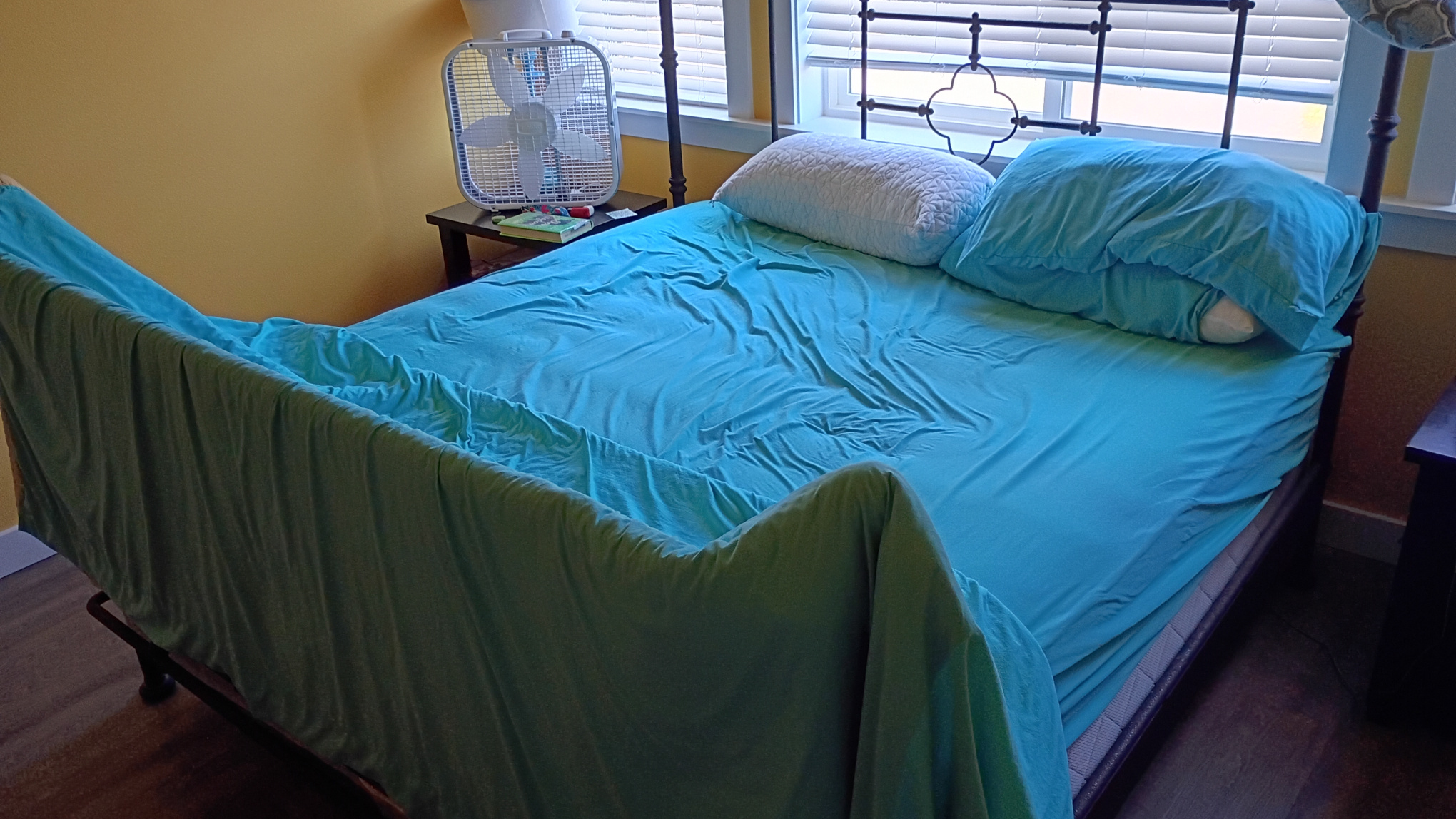
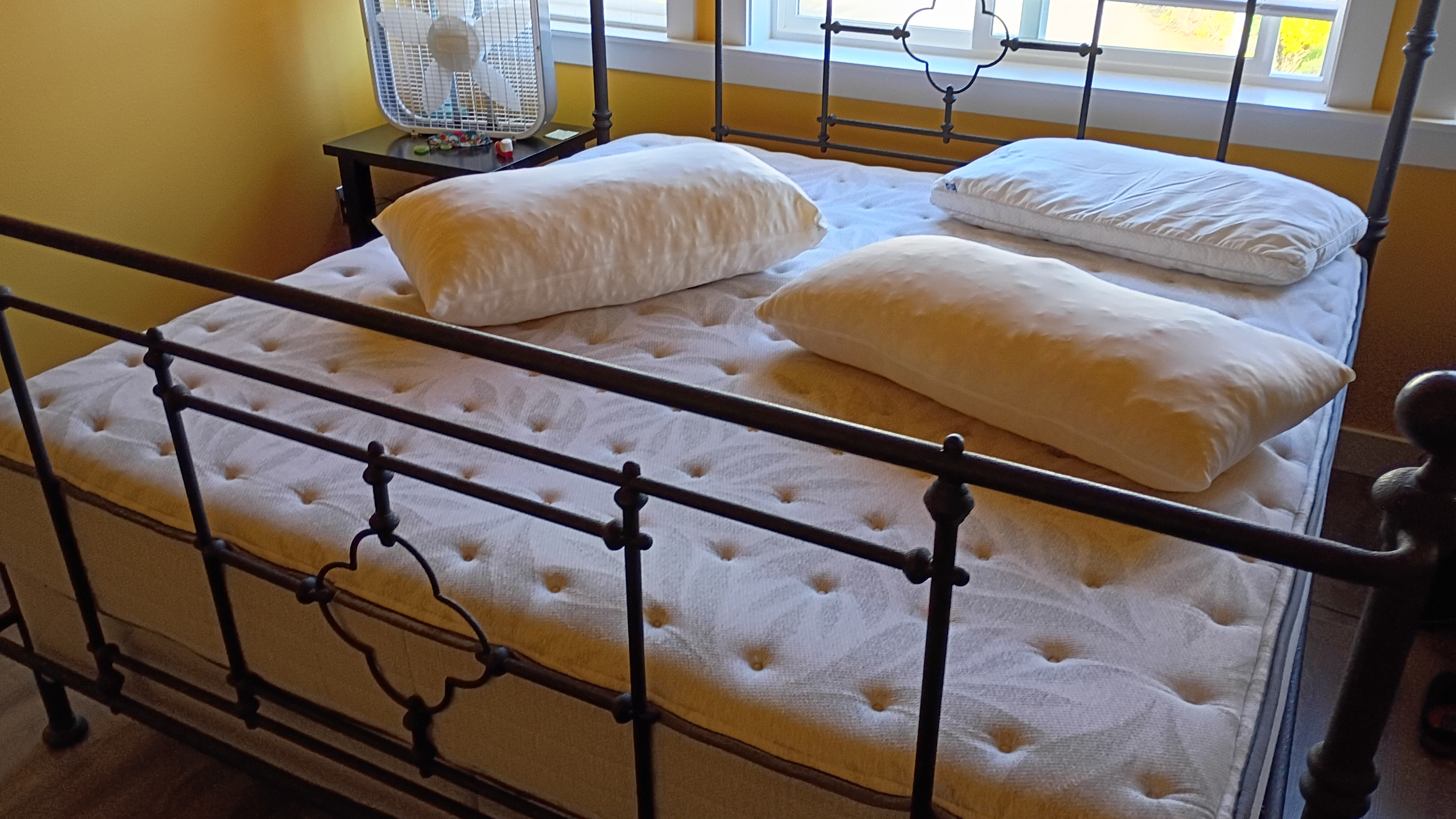
making the bed: pup tent
❄
making the bed: cannoli

❄
making the bed: tasteful nude
caveat lector

